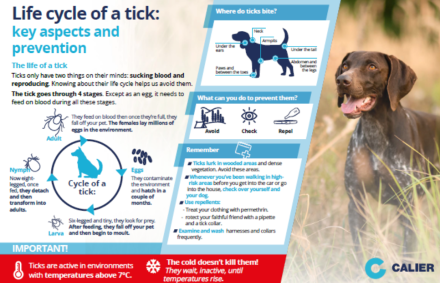
Have fleas taken over your pet? It’s more than likely that they’ve also taken over your pet’s favourite spots. However, no matter how often you bathe your dog or how many insecticides you apply, it won’t be enough to get rid of them. Until you remove their eggs, larvae and pupae from the environment, the fleas won’t go away.
Have you treated your dog for fleas, yet they keep coming back? This is a very common situation. The reason usually lies in the invisible stages of the parasite: the eggs, larvae and pupae that remain in the environment.
Even if you remove the adult fleas you can see on your pet, the infestation will continue as long as the immature stages continue to develop in carpets, beds, sofas or cracks in the floor.
The good news is that, with the right cleaning and prevention strategy, it is possible to break the flea life cycle and prevent your home from becoming infested again.
Why are flea eggs the real problem?
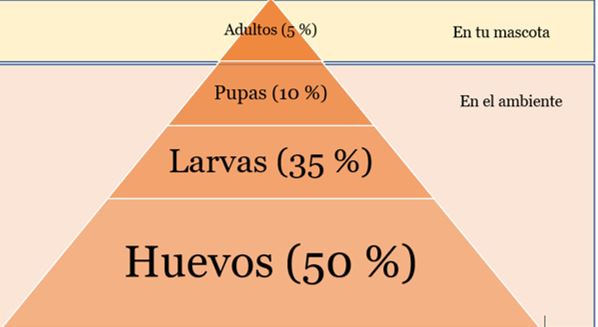
Eggs account for approximately 50 per cent of a flea infestation. A single adult flea can lay hundreds or even thousands of eggs during its lifetime.
These eggs are:
- Very small, similar to a grain of sand.
- White or translucent in colour.
- Difficult to spot with the naked eye.
- Capable of falling from your pet’s coat and spreading throughout your home.
Therefore, even if you treat your dog or cat, the problem may persist if the eggs remain in the environment.
How to tell if you have fleas at home
One of the most reliable signs is not the eggs, but what is known as ‘flea dirt’ – small black or reddish particles which are the faeces of adult fleas.
To check:
- Comb your pet.
- Place the debris you’ve collected onto a white tissue.
- Add a few drops of water.
If the black particles produce a reddish halo, it’s very likely that there’s an active flea infestation.
Where flea eggs hide
Eggs tend to accumulate in the areas where your pet spends most of its time:
- Beds and blankets.
- Cushions and sofas.
- Rugs and carpets.
- Under furniture.
- Skirting boards and corners.
- Wooden or laminate floors with cracks.
- Toys and fabric accessories.
Cleaning the environment: key to eliminating flea eggs
Flea treatments often fail when they only target adult fleas and not the eggs, larvae and pupae present in the environment.
To eliminate flea eggs from your home, the first step is to wash your pet’s bedding, blankets, cushions and toys at the highest temperature suitable for each fabric. This reduces both the adult forms and the immature stages of the parasite.
The vacuum cleaner is another great ally. It is particularly useful on:
- Rugs and carpets.
- Sofas and armchairs.
- Under furniture.
- Skirting boards and corners.
- Wooden or laminate floors with cracks.
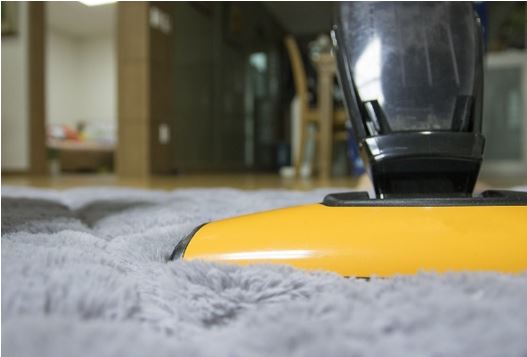
It is important to bear in mind that eliminating an environmental infestation may take several weeks or even up to three months, depending on the level of contamination and the environmental conditions.
Furthermore, before stepping up cleaning efforts, it is essential that your pet is properly protected against fleas. An effective strategy might combine a spot-on treatment with a complementary product such as Effinol Spray and a Merlin anti-parasite collar, designed to provide continuous protection. This helps prevent any new fleas that emerge from re-infesting your pet whilst the environment is being cleaned.
How to break the flea life cycle using IGR molecules
Traditional insecticides eliminate adult fleas, but have limited effectiveness against eggs and other immature stages. For this reason, many vets recommend products containing IGRs (Insect Growth Regulators), molecules that prevent the normal development of eggs and larvae, helping to break the flea life cycle.
IGR molecules can be administered in various ways, but one of the most convenient options is via spot-on pipettes.
One example is Dynacan pipettes, which combine an IGR molecule with an antiparasitic insecticide. Thanks to this combination, eggs laid by fleas on the treated animal cannot develop properly, helping to progressively reduce environmental contamination. In this way, the treatment acts on both adult fleas and the immature stages of the life cycle.
Furthermore, Dynacan provides up to 8 weeks’ protection against fleas, making it easier to control re-infestations.
How to prevent your home from becoming infested again
Prevention is key to keeping your home flea-free in the long term. To minimise the risk of further infestations, we recommend:
- Maintaining a regular cleaning routine.
- Vacuuming your pet’s resting areas regularly.
- Checking their coat regularly.
- Use anti-parasite treatments consistently throughout the year.
- Always consult your vet to find out which option is most suitable for each species and situation.
A combination of anti-parasite products that target different stages of the flea life cycle, such as Dynacan spot-on treatments, Effinol Spray and the Merlin collar, can help protect your pet, reduce environmental contamination and minimise the risk of re-infestation.
 08 Sep 2026